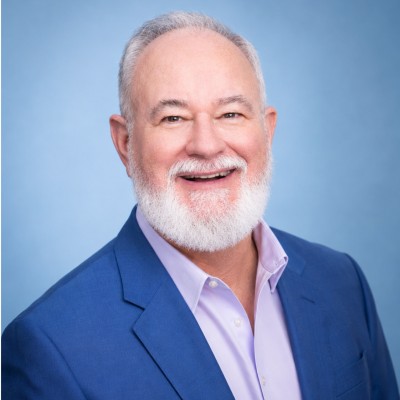
Brad Poulos is a lifelong entrepreneur, educator, consultant, and author who started his first business at just 14 years old. His career includes launching Canada's first satellite-based internet product, DirecPC, and founding and leading multiple companies in telecommunications and software. Today, Brad shares his experience as a lecturer in entrepreneurship at Toronto Metropolitan University and as a mentor and advisor to small and midsize businesses across North America.


Here’s a glimpse of what you’ll learn:
- [01:40] Why entrepreneurs should validate the problem and market before investing heavily in building a solution.
- [03:35] How one company tested its sports jersey rental concept with real customers and changed its business model based on what it learned.
- [05:05] Why founders eventually need to get out of the way and give their teams the autonomy to make decisions.
- [07:55] Why Brad believes goals aren't enough and systems are what actually produce value for customers.
- [12:00] What venture capitalists look for that differs from what banks consider when evaluating a business.
- [13:45] The three components of the Talent Triangle and why no single founder should try to own all three.
- [16:00] How Brad's Operator's Cadence connects long-term vision with annual, quarterly, weekly, and daily execution
In this episode:
A great idea doesn't build a successful business. The systems for testing, executing, delegating, and improving that idea are what turn it into one.
In this episode, Adi Klevit interviews Brad Poulos, entrepreneur, educator, consultant, and author, about some of the most common mistakes entrepreneurs make as they start and grow their companies. Brad begins with a lesson from his own experience launching DirecPC, when he raised $2 million before ever speaking with a customer. Today, he advocates a very different approach: start with a problem, develop hypotheses, talk to potential customers, run small experiments, and validate demand before investing heavily in the solution.
Adi and Brad then move into what happens once the business begins to grow. Founders have to learn to step out of day-to-day decision-making and give capable people the autonomy to solve problems themselves. Brad shares a simple technique he used when employees brought him decisions they could make on their own: he would ask what they would have done if he hadn't been available. Over time, that approach helped develop stronger, more independent team members while allowing him to spend more time working on the business.
The conversation ultimately comes back to systems. Brad explains that customers don't pay businesses for their goals. They pay for the systems that produce the results those goals represent. From SOPs and team development to financing and strategic planning, entrepreneurs need repeatable ways to turn intentions into execution. Adi and Brad also discuss why critical operational knowledge needs to be captured in a living playbook so it can be transferred, maintained, and improved as the company grows.
Resources mentioned in this episode:
- Adi Klevit on LinkedIn
- Business Success Consulting Group
- Brad Poulos on LinkedIn
- Brad Poulos Website
- Most Problems Solve Themselves by Brad Poulos
- Brad's Book List
Quotable Moments:
- “Because you can do something doesn't mean that you should.”
- “You have to work from a problem outward.”
- “A goal without a system is just a dream.”
- “Your customer will never pay for your goal.”
- “Will they pay for the system that's behind you moving from wherever you are to 98%? Absolutely.”
- “You steal the idea, you steal the concept, but then you have to morph it and customize it to your own situation.
Action Steps:
- Validate before you build. Start with the problem, talk directly with potential customers, and run small experiments before making a significant investment.
- Train employees to make decisions. When someone brings you a problem, ask what they would do if you weren't available instead of automatically providing the answer.
- Give strong performers autonomy. Create enough structure for consistency while giving capable people room to make decisions and take ownership.
- Build systems behind your goals. Define the repeatable activities that will actually produce the result you're trying to achieve.
- Capture critical knowledge. Document business expertise, operational experience, and best practices in a playbook that can evolve as the company changes.
- Build a complementary team. Make sure your organization has business acumen, domain knowledge, and operational expertise instead of expecting one founder to provide everything
Sponsor for this episode:
This episode is brought to you by Business Success Consulting Group.
At Business Success Consulting Group, we create custom processes and tailor-made management systems so businesses can thrive.
Businesses simply can’t survive without workable systems and well-documented processes. That’s why our team of experienced professionals takes care of it for you.
We provide business owners, entrepreneurs, and key executives with six phases to success, along with the long-lasting systems necessary to support business expansion.
So, what are you waiting for? Do yourself a favor and cut the chaos out of your business.
Visit bizsuccesscg.com today or email info@bizsuccesscg.com to schedule a free consultation.